- Vivências – Learning Through Shared Experience
- Working with Trees – Patrick Barmet
- Living Soil – Ramon Grendene
- Manifesto of the Second Soil Assembly – Manaus
- Decolonization of the Plate – Now!
- Displacement of Sustainable Agriculture
- Art and Soil
- Agroforesty Systems
- Live of Soil
- From Body to Land
- Participatory Agriculture
- PANC Amazon Wild Plants
- Fermenting and Transforming
- Deforestation
- The natural landscape
- With the fields
- Handicrafts from farmers
The landscape as a school – a living laboratory in the Amazon, Brazil.
The school: vision, educational approach and development of the territory.
What if a twelve-year-old girl from the neighbourhood, a farmer without formal qualifications, an agroecologist and an earth-building specialist designed a school together?
At Tera Kuno, this question becomes practice. It is not diplomas that determine whose knowledge counts, but experience, curiosity and mutual learning. In 2027, we will build the Escola da Floresta Viva together with the local community in the Amazon: with an open forest-school kitchen, a House of Knowledge and spaces for regenerative agriculture.
Five years of shared practice are giving rise to a new learning place in the Brazilian Amazon: the Escola da Floresta Viva. The school brings together education, art, agroecology and the knowledge of local communities. The landscape itself becomes a learning environment in which children and adults learn by researching, planting, building, cooking and experimenting together.
Inspired by Paulo Freire’s dialogical pedagogy and an understanding of knowledge as a lived relationship with nature, the school is developing a model that connects formal education with regenerative landscape stewardship.
What we have built so far
Since 2021, Tera Kuno and local communities have developed diverse forms of collective learning at the Centro de Treinamento Agroflorestal near Manaus. Arte & Escola na Floresta, collective Ajuri work, agroforestry areas and Sala Verde workshops have grown into a living practice of education and research. Between 2022 and 2026, more than 400 activities brought together over 5,000 participants. This experience forms the foundation of the new school.
A new territory
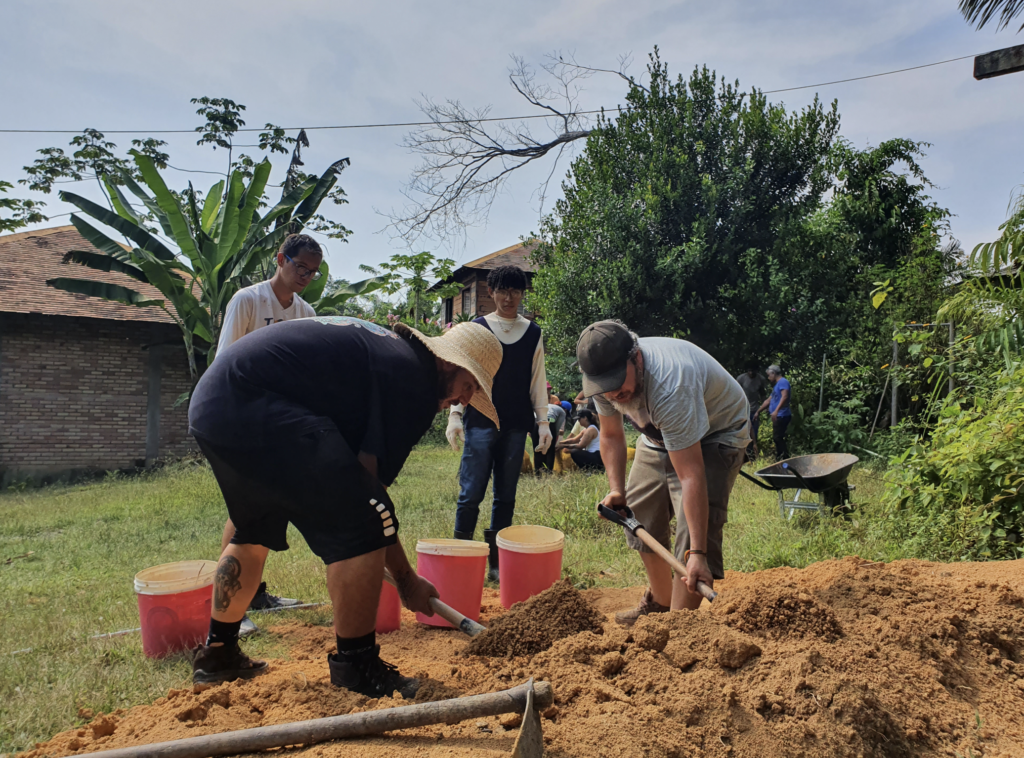
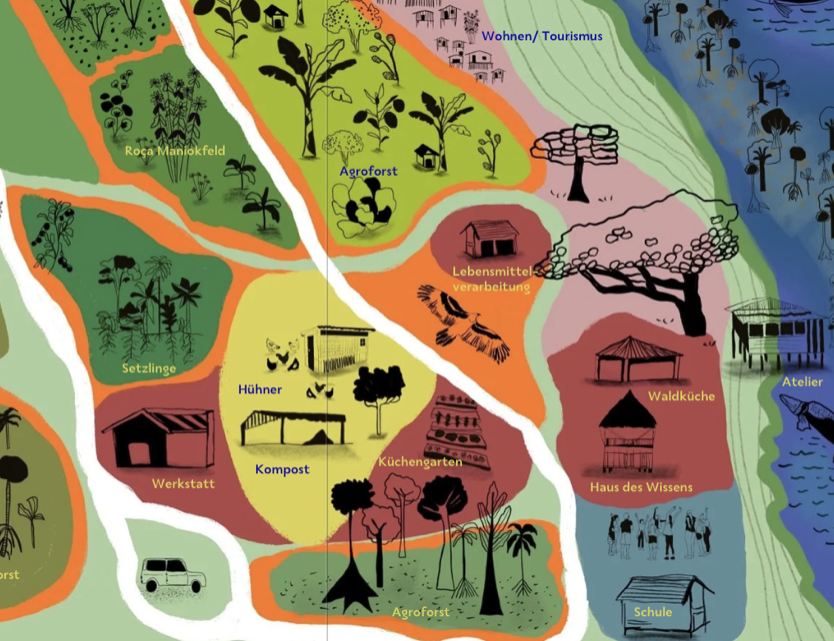
On approximately 32 hectares beside the Puraquequara River near Manaus, Tera Kuno is developing a permanent place for community education and regenerative practice. Planned facilities include a House of Knowledge (Maloca), an open forest-school kitchen, shared learning spaces, workshops and agroforestry areas. Building the school will itself be part of learning: collective construction workshops will explore and apply local materials, craft knowledge and ecological techniques.
People & collaboration
The Escola da Floresta Viva is being developed by Instituto Tera Kuno together with local communities and an interdisciplinary educational network. Participants bring experience from education, agriculture, art and science, including collaborations with Universidade do Estado do Amazonas (UEA), Universidade Federal do Amazonas (UFAM) and Instituto Federal do Amazonas (IFAM). International collaboration with Tera Kuno Switzerland supports knowledge exchange, educational development and new partnerships.
Educational advisory group
Adana Kambeba – Indigenous science, health and intercultural education.
Prof. Ceane Simões (UEA) – Community-based education and curriculum development.
Majé Beth (Bernadete Freires) – Indigenous plant knowledge, agriculture and cultural education.
Neila Gonçalves – Local community representation and family participation.
Prof. Simão Corrêa (IFAM) – Agroecology, environmental education and practice-based training.
Zezinho (Jose Eduvicio Caldeira) – Manaus rural workers’ union, former EFA president, rural education.
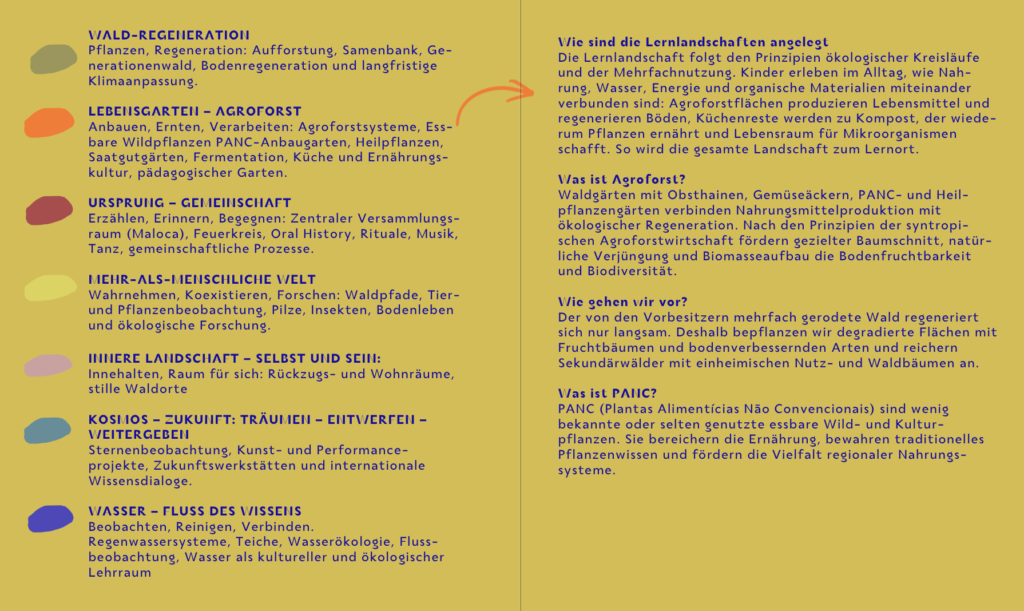
What is taking shape
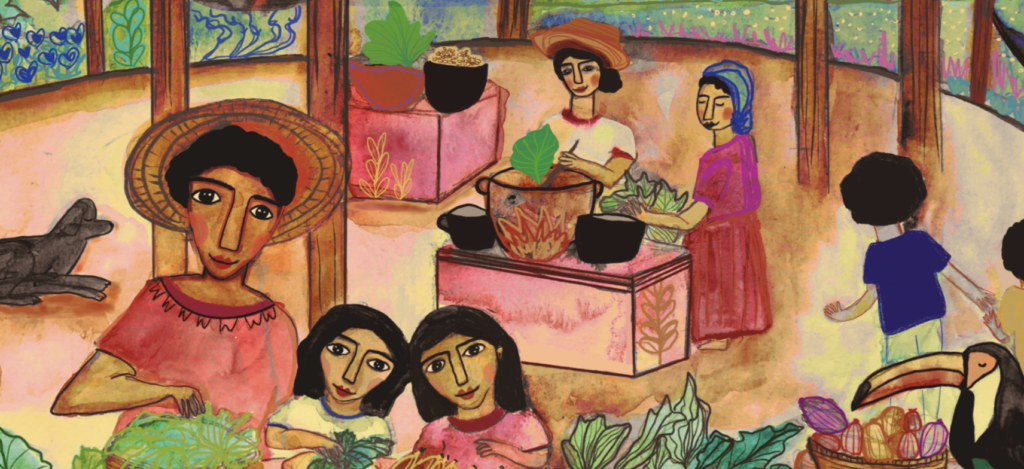
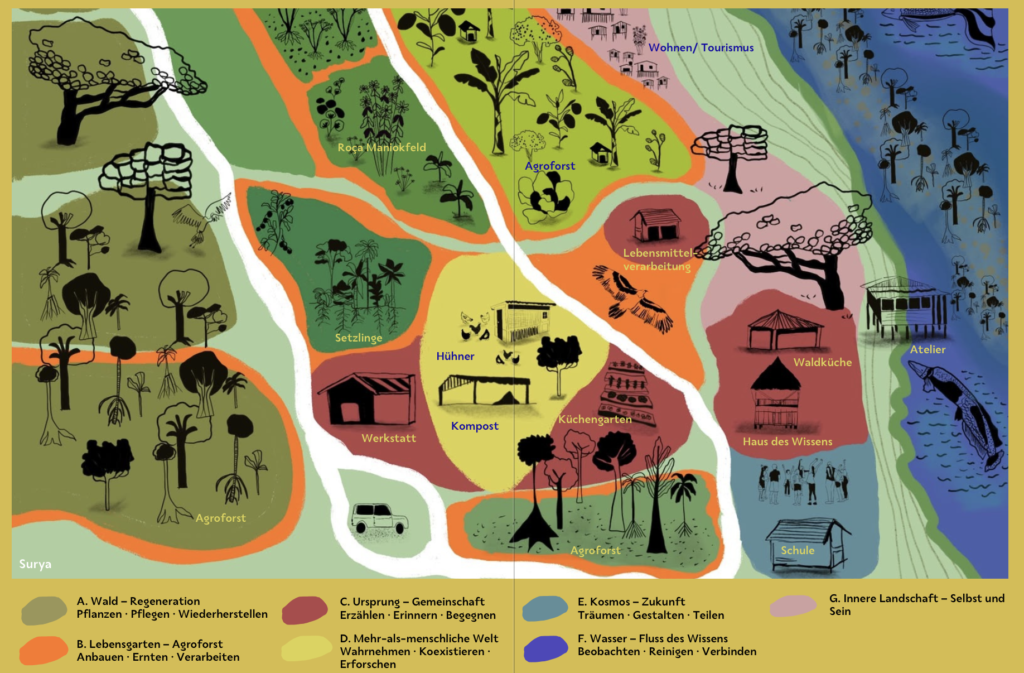
Maloca, forest-school kitchen, learning spaces, agroforestry and the next construction phases.
Current status & funding
In 2026, the focus is on the educational concept, preparing the territory and planning the first construction phase.
From 2027, the House of Knowledge, forest-school kitchen and initial learning spaces are planned to be built collectively.
A budget of approximately CHF 310,000 is planned for the development phase. Funding will combine foundation grants, crowdfunding, partnerships and in-kind contributions.
Documentation & development
2021–2025 · Foundations Collective practice, art, agroforestry and educational programmes at the previous site.
2026 · Planning and transition Development of the educational concept, expansion of the network and preparation of the new territory. New chicken coop and fish tank, new garden.
2027 · Building together Planned collective building workshops, development of educational facilities and continuation of regenerative practice.
Documentation
Documentation includes photographs, plans, participants, workshops, outcomes and the school’s development. Download PDF (coming soon)